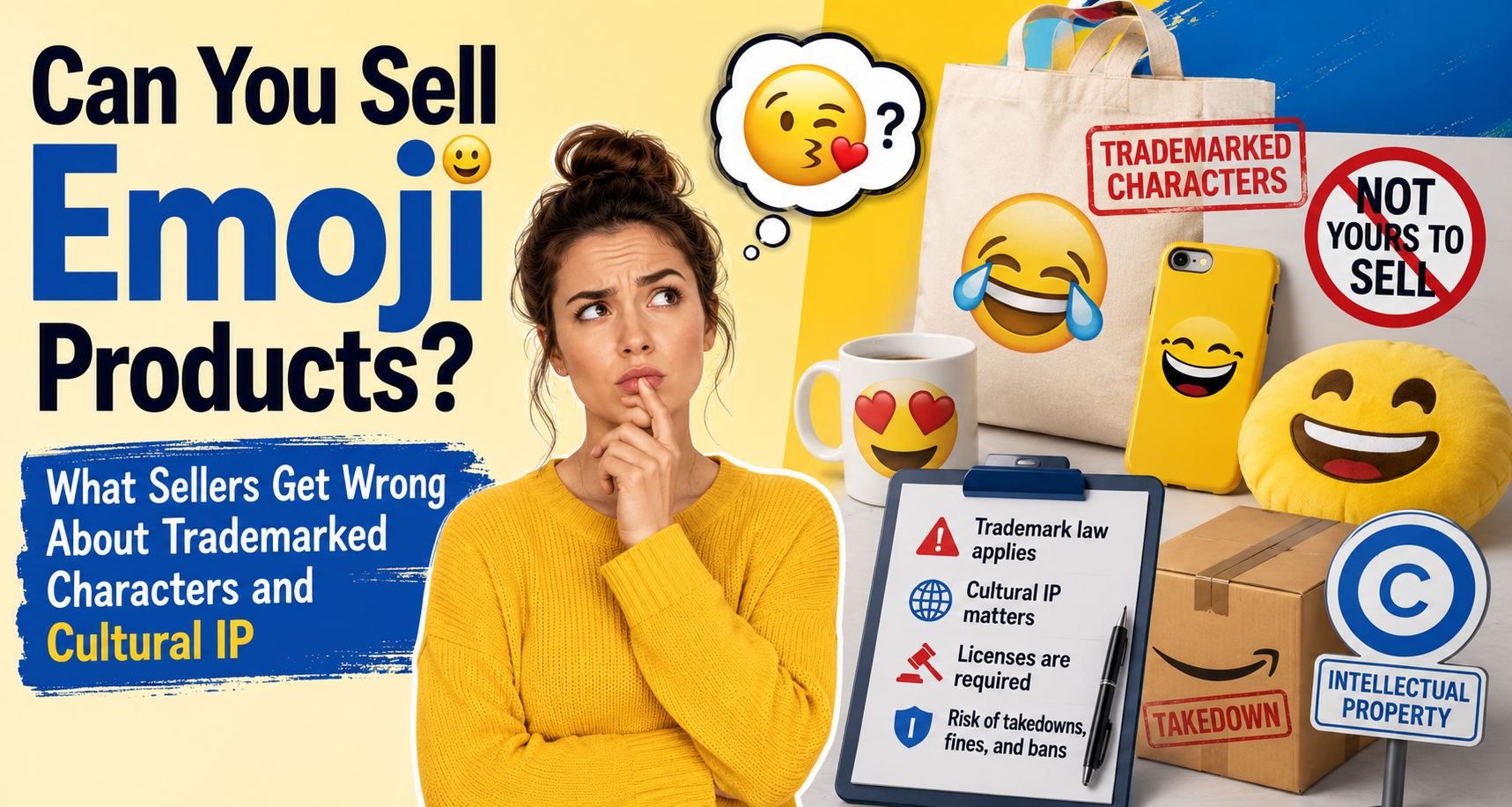
Can You Sell Emoji Products? What Sellers Get Wrong About Trademarked Characters and Cultural IP
Emoji, memes, and viral internet characters feel like they belong to everyone. So a lot of sellers assume they’re free to put on products and sell. Often, that assumption is wrong — and it leads to trademark lawsuits that catch sellers completely off guard. Here’s the distinction that matters, and how to stay on the right side of it.
No one owns a smiley face — but a brand can be owned
This is the line that trips sellers up. Nobody owns the basic idea of a smiley face or a generic emotion symbol. What can be protected is a specific company’s brand built around them: a brand name (for example, the “Emoji” brand), official logos, and the particular licensed designs, characters, and product lines that company created and registered.
So “everyone uses emoji” is true in casual life and misleading in commerce. If you use the branded version — the registered name, the logo, or a licensed design — on a product you’re selling, that can be trademark infringement even though the general concept feels public.
The brand name in your listing is a common trigger
Emoji-themed products are everywhere: phone cases, mugs, pillows, t-shirts, stationery, toys, and holiday gifts. To boost clicks and search ranking, sellers often add terms like “Emoji®,” “Official Emoji,” or “Emoji Brand” to their titles, keywords, and SEO.
That use of a brand’s name is frequently what puts a seller inside the trademark owner’s monitoring — and on a defendant list. The product might even be harmless on its own; it’s the branded name or logo attached to it that creates the exposure.
Digital and cultural IP is being enforced now too
Sellers tend to think of IP enforcement as a luxury-brand, sports, or film-and-TV issue. Increasingly, it covers digital and internet culture as well — emoji, online characters, social media IP, and trending designs. As internet culture gets commercialized, the companies that own the branded versions of these things are actively protecting them.
The takeaway is broader than emoji: a popular internet element — a meme, a character, a viral design — is not automatically free to sell commercially just because it’s everywhere online.
Who is most exposed
Print-on-demand sellers using emoji or character designs on shirts, mugs, and cases Gift and toy sellers using licensed-looking characters Amazon sellers using “Emoji®” or “Official Emoji” in listings Sellers marketing off emoji or meme culture on social platforms Independent sites using brand terms for SEO
How to stay clear of it
The fix is upstream, before anything goes live:
Don’t use a brand’s registered name, logo, or licensed designs on your products, titles, keywords, or ads unless you’re authorized. Treat “everyone uses it” as a warning sign, not a green light — popularity doesn’t equal permission. If you’re building a product line around any popular cultural element, run a trademark check first, and use original or properly licensed designs. For a high-value listing, have the rights reviewed before you publish rather than after a complaint arrives.
Popular cultural symbols feel free precisely because they’re everywhere — which is exactly why the trademark risk around them is so easy to miss. Checking before you list is far cheaper than handling a lawsuit after.
General information only, not legal advice. Every case turns on its own facts.