
Amazon Took Down Your Listing Over an IP Complaint? How to Get It Back
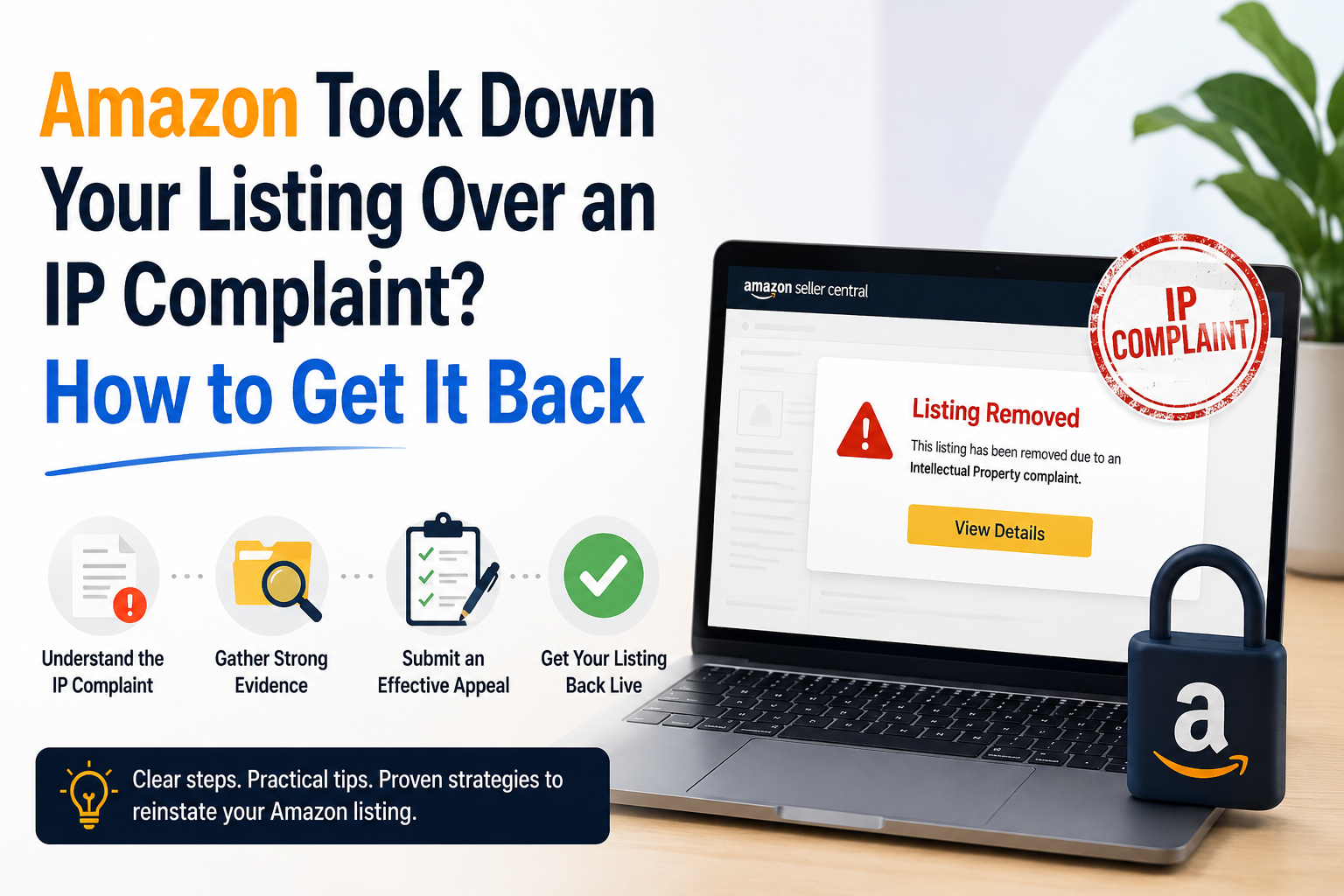
One morning your best-selling listing is gone. Amazon says it was removed after an intellectual property complaint — someone reported it as infringing a trademark, copyright, or patent. You file an appeal in Seller Central, and it gets rejected almost instantly. Here’s what’s actually happening, why the standard appeal so often fails, and the realistic ways to get a listing back.
A platform complaint is not a lawsuit
This is the first thing to get straight, because it changes everything about how you respond. An IP complaint is filed with Amazon itself — not with a court. There’s no judge, no frozen bank funds, no lawsuit (yet). Amazon, to protect itself, tends to take the listing down first and ask questions later.
That makes it different from a TRO (Temporary Restraining Order), where a court freezes your funds and pulls your listings by court order. A complaint is a platform action; a TRO is a legal one. The response paths are different, so the first step is knowing which situation you’re in.
The real loss isn’t your inventory — it’s ranking and reviews
Sellers often focus on the stock sitting in a warehouse. But the far bigger loss is what a listing carries. A product page that spent months or years climbing search results, accumulating hundreds or thousands of reviews, is a genuine business asset. When a listing is removed and you have to create a new one, that ranking and those reviews don’t come with it.
During peak shopping season, the value of a top-ranked listing with strong reviews can dwarf the value of the inventory itself. That’s why getting the same listing restored — not just relisting the product — is the whole objective.
Why the dashboard appeal usually fails on its own
Sellers appeal through Seller Central with a short message and maybe an invoice, and the appeal comes back rejected. The reason is that a bare appeal doesn’t give Amazon what it needs: a clear, credible argument that you don’t infringe. Templated appeals tend to get templated rejections.
To move the needle, an appeal generally has to do three things: identify exactly what right is being claimed against you, show clearly why your product doesn’t fall within it, and back that up with evidence. Which is what the recovery process below is built around.
How listing recovery actually works: an escalation ladder
There isn’t one single fix — there’s a ladder, from lightest and cheapest to most forceful. You climb only as far as the value of the listing justifies.
A stronger dashboard appeal. A well-built non-infringement explanation plus supporting proof (invoices, authorization chain, product images) submitted through the normal appeal channel. Enough for many lower-value listings. An attorney-reviewed opinion. A licensed US attorney reviews and stands behind the non-infringement argument, which carries far more weight with the platform than a seller’s own statement. A letter to the complainant. The attorney contacts the person who filed the complaint and asks them to withdraw it. Because the complainant filed the takedown, getting them to retract it can restore the listing directly. A court ruling of non-infringement. In the strongest cases, you ask a US court for a formal declaration that you don’t infringe (a “declaratory judgment”), then submit that ruling to the platform. This is the most powerful evidence you can present, because a court — not your lawyer or the complainant — has settled the question. Emergency measures where the situation and timing require them.
Most cases don’t need to reach the top of the ladder. The point is that a path exists, so a takedown isn’t the end of the story.
What a non-infringement argument needs
Whatever level you’re at, the substance is similar. A credible non-infringement position identifies the right at issue (the trademark, copyright, or patent — its owner and scope), compares your product against it, and applies the correct legal test — for example, “likelihood of confusion” for a trademark, or the “ordinary observer” comparison for a design patent. It then attaches the evidence (invoices, proof of authorization, images) and concludes with a clear request to restore the listing.
An important boundary: AI tools can help draft and compare quickly, but a formal legal opinion has to come from a licensed attorney. The draft is not the same as the signed opinion the platform takes seriously.
No guarantees — and why
No approach, even the most aggressive, can promise a platform will restore a listing, because the platform ultimately has discretion over its own marketplace. What the stronger steps buy you is a much better-quality argument and the ability to keep escalating if the first attempt fails — better odds and more options, not a certainty.
The bottom line
If a listing is removed over an IP complaint, don’t burn the critical days re-submitting the same weak appeal over and over. Confirm what right is being asserted, decide how much the listing is worth protecting, and match your response to that value — from a stronger appeal, to an attorney-backed opinion, to a court ruling for your most valuable pages. And the cheapest fix is always upstream: checking your trademarks, images, and product designs before you list, so the complaint never comes.
General information only, not legal advice. Every case turns on its own facts.